A small cavity may not seem like a serious problem, but without treatment it can gradually become larger and affect more of the tooth. Over time, untreated decay may lead to persistent sensitivity, pain, infection, or even tooth loss. Fortunately, many of these problems can be managed early with a tooth filling, allowing the tooth to be repaired before more extensive treatment becomes necessary.
If you are looking for tooth filling treatment near Ruaka, you may be wondering whether a filling can repair your tooth, relieve discomfort, or prevent future dental problems. You may also be searching for information about how much a tooth filling costs in Kenya. While treatment costs vary according to each patient’s needs, understanding how fillings work can help you make informed decisions before visiting a dentist.
Patients travelling from Ruaka can conveniently access dental care at Ruby Smiles Dental Clinic, located at Unicity Mall along Thika Road. Before recommending treatment, the dental team performs a thorough examination and may use dental X-rays where clinically appropriate to determine the extent of tooth damage. This helps ensure that every patient receives a treatment plan suited to their individual condition.
Although tooth fillings are one of the most common restorative dental procedures, they are not suitable for every damaged tooth. Larger cavities, extensive fractures, or deep infections may require treatments such as root canal therapy or a dental crown instead. Seeking treatment early often increases the chances of preserving your natural tooth with a simple restoration.
Quick Answer
A tooth filling repairs a tooth damaged by decay or minor fractures by replacing the lost tooth structure with a restorative material. The treatment helps restore strength, improve chewing, preserve the natural tooth, and prevent further cavity progression.
Some of the main benefits include:
- Repairing cavities.
- Restoring tooth structure.
- Improving chewing function.
- Preserving natural teeth.
- Improving appearance with tooth-coloured materials.
- Helping prevent more complex restorative treatment.
Ruby Smiles Dental Clinic has not published verified tooth filling prices. The final treatment cost depends on factors such as the size of the cavity, the filling material used, the tooth being treated, and overall treatment complexity. Following your examination, your dentist can provide a personalised written quotation.
What Is a Tooth Filling?
A tooth filling is a restorative treatment used to repair a tooth after decay or minor damage has been removed. Rather than replacing the entire tooth, a filling restores only the affected area, allowing the remaining healthy tooth structure to continue functioning normally.
After removing the decayed portion, the dentist carefully cleans the cavity before placing a suitable filling material. The restoration is then shaped and polished to match the natural contours of the tooth and ensure your bite feels comfortable.
Modern filling materials are designed to restore both function and appearance. Tooth-coloured composite fillings are commonly used because they blend closely with natural teeth while providing good support for many restorations.
However, fillings are only appropriate when enough healthy tooth remains. If damage extends too deeply into the tooth, other restorative procedures may be required.
How Can Tooth Fillings Help Fix Dental Problems?
Tooth fillings help restore teeth affected by early to moderate damage before more extensive treatment becomes necessary.
Depending on the examination, fillings may be used to treat:
- Tooth cavities.
- Small chips or fractures.
- Worn tooth surfaces.
- Damaged older fillings.
- Minor structural defects.
By restoring these problems early, fillings help preserve natural tooth structure and support long-term oral health.
Benefits of Tooth Fillings
Tooth fillings offer several important advantages when they are used at the appropriate stage of tooth decay.
Restore Tooth Structure
A filling replaces the damaged portion of the tooth, helping restore its normal shape and function.
Prevent Further Decay
After the decayed tissue has been removed, the restoration seals the prepared area and helps stop the cavity from progressing further.
Improve Chewing Function
Repairing a damaged tooth often makes eating more comfortable and restores normal biting function.
Support a Natural Appearance
Composite fillings closely resemble natural tooth enamel, making them an excellent option for many visible teeth.
Preserve Natural Teeth
Treating cavities early allows many teeth to be restored without removing the entire tooth, helping maintain your natural smile.
Reduce the Need for More Complex Treatment
Prompt treatment of cavities may reduce the likelihood of needing root canal treatment, crowns, or extraction if decay progresses deeper into the tooth.
Why Early Treatment Matters
Many cavities develop without causing obvious symptoms. By the time severe pain occurs, the decay may already have reached deeper parts of the tooth.
Early dental examinations allow cavities to be identified before they become larger and more difficult to treat. Smaller restorations generally preserve more healthy tooth structure and often involve less complex treatment than advanced decay.
Seeking professional dental care as soon as you notice sensitivity, discomfort, or visible changes in a tooth improves the chances of restoring the tooth with a filling while maintaining good long-term oral health.
What Happens During a Tooth Filling Procedure?
Many patients are surprised by how straightforward a tooth filling procedure can be. The exact steps depend on the size and location of the cavity, but treatment generally begins with a careful examination to determine whether a filling is the most appropriate solution.
A typical tooth filling procedure includes:
- A dental examination.
- Dental X-rays where clinically appropriate.
- Removal of decayed tooth tissue.
- Cleaning the prepared cavity.
- Placement of the filling material.
- Shaping the filling to restore the natural tooth.
- Polishing the restoration.
- Adjusting the bite to ensure comfort.
The goal is to remove only the damaged portion of the tooth while preserving as much healthy tooth structure as possible. Once the filling has been placed, your dentist will check that your teeth come together comfortably when you bite.
The time required depends on the number of teeth being treated, the size of the cavity, and the complexity of the restoration.
Types of Tooth Filling Materials
Several filling materials are used in modern dentistry, each offering different advantages depending on the location of the tooth and the patient’s needs.
Composite Resin Fillings
Composite resin is one of the most commonly used filling materials today. Because it closely matches the natural colour of teeth, it is often chosen for visible areas of the mouth.
Benefits include:
- Natural appearance.
- Bonds directly to the tooth.
- Suitable for many front and back teeth.
- Conserves more healthy tooth structure in many situations.
Glass Ionomer Fillings
Glass ionomer fillings are used in selected situations, particularly where fluoride release may be beneficial. They may be appropriate for certain non-load-bearing areas depending on the clinical assessment.
Amalgam Fillings
Although less commonly used than in previous years, dental amalgam remains an option in some situations. It is recognised for its durability but is more noticeable because of its metallic colour.
Ceramic Restorations
Ceramic restorations may be considered for larger defects where greater strength and aesthetics are required. They are generally fabricated differently from direct fillings and may require additional appointments.
Your dentist will recommend the most appropriate material based on the tooth’s condition, appearance, function, and long-term treatment goals.
Tooth Fillings vs Other Dental Treatments
A filling is not the right solution for every damaged tooth. The most appropriate treatment depends on how much of the tooth has been affected.
| Treatment | When It May Be Appropriate |
|---|---|
| Tooth Filling | Small to moderate cavities and minor tooth damage. |
| Dental Crown | Teeth with extensive structural loss that require additional protection. |
| Root Canal Treatment | Infection has reached the dental pulp but the tooth can still be preserved. |
| Tooth Extraction | The tooth cannot be predictably restored or preserved. |
The aim is always to preserve healthy tooth structure whenever possible. Your dentist will explain why a particular treatment is recommended after examining the tooth.
Recovery and Aftercare
Recovery after a tooth filling is usually quick. Many patients resume their normal daily activities immediately after treatment, although mild sensitivity is possible for a short period.
Following treatment, it is helpful to:
- Brush and floss your teeth every day.
- Maintain regular dental check-ups.
- Avoid biting very hard foods until the filling feels comfortable.
- Return for review if your bite feels uneven.
- Contact your dentist if sensitivity becomes worse instead of improving.
Looking after your filling is just as important as caring for your natural teeth. Good oral hygiene and routine examinations help fillings last longer and allow dentists to detect any wear or damage early.
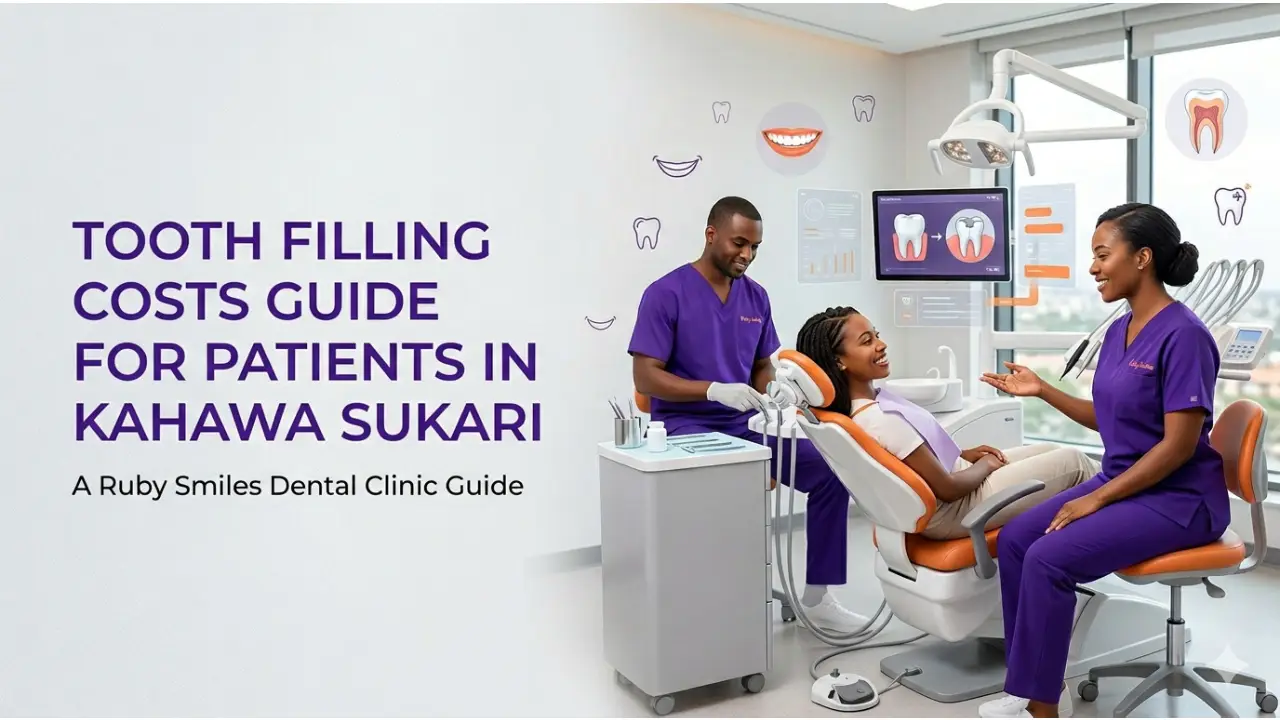
What Influences Tooth Filling Costs?
Many patients searching online ask, “How much is tooth filling in Kenya?” The answer depends on the individual tooth rather than a single standard price.
Because Ruby Smiles Dental Clinic has not published verified filling prices, it would be inaccurate to provide a specific cost.
Factors that commonly influence treatment costs include:
- The size of the cavity.
- The filling material selected.
- The tooth being treated.
- The number of tooth surfaces involved.
- Whether dental X-rays are required.
- The number of fillings needed.
- Overall treatment complexity.
Following your examination, your dentist can provide a personalised written quotation explaining the recommended treatment and the expected costs.
Frequently Asked Questions
Can a tooth filling stop tooth pain?
If the discomfort is caused by a cavity that is suitable for a filling, restoring the tooth may help resolve the problem. However, pain can have many causes, so a professional examination is necessary before treatment is recommended.
How long do tooth fillings last?
The lifespan of a filling varies depending on the material used, the size of the restoration, oral hygiene, chewing habits, and regular dental care.
Do tooth fillings hurt?
Many fillings are completed comfortably using local anaesthesia where required. Your dentist will explain the procedure before treatment begins.
Can old fillings be replaced?
Yes. Worn, damaged, or leaking fillings can often be replaced after your dentist assesses the condition of the tooth.
When is a filling no longer enough?
If decay has reached the inner pulp of the tooth or too much tooth structure has been lost, treatments such as a root canal procedure or a dental crown may be more appropriate.
Book Your Tooth Filling Consultation Today
If you are travelling from Ruaka, Ruby Smiles Dental Clinic welcomes you to its convenient Unicity Mall location along Thika Road for a professional dental examination and personalised treatment planning. Your dentist will carefully assess the affected tooth, recommend dental X-rays where appropriate, and determine whether a tooth filling is the most suitable treatment or whether another restorative option would provide a better long-term outcome.
During your consultation, you will receive a clear explanation of your diagnosis, guidance on the most appropriate filling material for your needs, and a personalised written quotation based on your clinical findings. If a filling is not the best solution, your dentist will discuss alternative treatments and explain why they may be recommended.
Book your tooth filling consultation today at Ruby Smiles Dental Clinic for expert diagnosis, personalised restorative care, and professional treatment focused on preserving your natural teeth and maintaining your long-term oral health.