If you have been searching for “what causes tooth cavity,” the answer involves more than eating sugar. Cavities develop when dental plaque biofilm, acid-producing bacterial activity, fermentable carbohydrates and repeated acid exposure create periods of mineral loss from the teeth. Saliva, fluoride exposure, oral hygiene and individual risk factors also influence whether that mineral loss progresses.
For patients in Githurai seeking treatment, the right dental provider should offer proper assessment, explain available options and recommend treatment according to the stage of decay. Ruby Smiles Dental Clinic offers tooth filling treatment at its Unicity Mall location along Thika Road, Nairobi.
What Causes Tooth Cavities?
Dental caries, commonly called tooth decay, is a dynamic disease process. It develops through repeated cycles of demineralization and remineralization.
Plaque biofilm contains microorganisms. When bacteria within this biofilm metabolize fermentable carbohydrates, they produce acids. These acids can lower the pH around the teeth and cause minerals to leave the enamel. Saliva and fluoride can help support remineralization between these acid exposures.
Problems develop when mineral loss repeatedly outweighs repair. Over time, the tooth structure can weaken enough for a physical cavity to form. This is why sugar alone should not be described as the sole cause of cavities.
What Causes Tooth Cavities?
| Factor | How It Contributes |
|---|---|
| Dental plaque biofilm | Creates an environment where acid-producing bacterial activity can occur |
| Frequent fermentable carbohydrates | Provide substrate for bacterial acid production |
| Repeated acid exposure | Promotes mineral loss from tooth structure |
| Inadequate fluoride exposure | Reduces protection against demineralization |
| Reduced saliva | Limits natural buffering and remineralization |
| Plaque-control challenges | Allow conditions that favour decay to persist |
| Tooth anatomy | Deep pits and difficult-to-clean areas may retain plaque |
| Existing restorations | Margins require careful plaque control and monitoring |
No single factor determines whether someone will develop a cavity. The balance between disease-promoting and protective factors matters.
How Do Sugar and Dental Plaque Contribute to Cavities?
Plaque is not simply food stuck to the teeth. It is a biofilm containing microorganisms that develops on tooth surfaces.
Bacteria within plaque can metabolize fermentable carbohydrates and produce acids. Frequent exposure to sugary foods and drinks can therefore create repeated periods in which the environment around the teeth becomes more acidic.
Frequency matters. Frequently sipping sugary drinks or snacking on sugary foods can expose teeth to repeated acid challenges.
Certain fermentable carbohydrates other than obvious sweets may also contribute to caries risk. However, not all carbohydrates affect the teeth equally, and avoiding sweets alone does not guarantee that someone will remain cavity-free.
What Roles Do Saliva and Fluoride Play?
Saliva provides natural protection for the teeth. It helps clear food, buffer acids and support the return of minerals to enamel after an acid challenge.
Reduced saliva can therefore increase cavity risk. Dry mouth may have several contributing factors, including medications, medical conditions, dehydration or salivary gland problems. Patients experiencing persistent dry mouth should seek professional advice rather than stopping prescribed medication.
Fluoride also supports remineralization and helps make tooth enamel more resistant to acid attack. Brushing effectively with fluoride toothpaste is therefore an important part of reducing cavity risk.
Who Is More Likely to Develop Tooth Cavities?
Cavities can affect children, teenagers, adults and older adults. They are not exclusively a childhood problem.
Risk can be influenced by frequent sugar exposure, ineffective plaque control, reduced fluoride exposure, dry mouth, tooth anatomy, existing restorations and previous caries experience.
Back teeth can have deep pits and fissures that retain plaque and are more difficult to clean. Decay can also develop between teeth where plaque is harder to remove. Exposed root surfaces may be more vulnerable where gum recession is present.
People with braces may also find plaque control more challenging around orthodontic appliances. Braces themselves do not directly cause cavities.
Existing fillings and crowns do not make the remaining natural tooth permanently immune to decay. New decay can develop around restoration margins, making continued oral hygiene and dental reviews important.
Can You Get Cavities Without Eating Sweets?
Yes. Avoiding sweets can reduce one important source of fermentable carbohydrates, but cavity risk involves several interacting factors.
A person who rarely eats sweets may still have other risk factors such as plaque accumulation, reduced saliva, inadequate fluoride exposure, difficult-to-clean tooth anatomy, frequent exposure to other fermentable carbohydrates or existing dental restorations.
Similarly, people who consider their diet healthy can still develop cavities. Dental caries is multifactorial, so prevention involves more than eliminating one particular food.
What Is the Difference Between Early Tooth Decay and a Cavity?
Early tooth decay and an established cavity are not exactly the same.
An early non-cavitated lesion involves mineral loss without physical breakdown of the tooth surface. Depending on professional assessment, this stage may sometimes be arrested or remineralized through measures such as fluoride, improved plaque control, dietary modification and monitoring.
An established cavity means physical tooth structure has been lost. Once this structural breakdown has occurred, brushing, supplements, diet changes or home remedies cannot simply regrow the missing tooth structure. Professional restorative assessment is generally required.
This distinction is important because not every early area of decay requires drilling and filling, while an established cavity may require restorative treatment.
What Are the Signs of a Tooth Cavity?
Possible symptoms of a cavity can include tooth sensitivity, toothache, discomfort when chewing, food trapping or visible changes in the tooth.
However, cavities may initially produce no noticeable symptoms. A tooth that does not hurt is not necessarily free from decay.
These symptoms also have other possible causes and should not be used to diagnose a cavity at home.
A dentist may assess suspected tooth decay using your dental history, clinical and visual examination, caries risk assessment and appropriate dental imaging where indicated. X-rays can sometimes help identify decay that is difficult to assess visually, including some cavities between teeth, but not every patient automatically requires an X-ray.
How Are Tooth Cavities Treated?
Treatment depends on how far tooth decay has progressed. Early non-cavitated decay and an established cavity may require different approaches.
Early decay may sometimes be managed with fluoride, improved plaque control, dietary changes and professional monitoring. Once physical tooth structure has been lost, restorative treatment may be required.
For an established cavity, a dentist may remove the affected tooth structure and restore the area with an appropriate filling material. Deeper decay may require another treatment if the dental pulp or a significant amount of tooth structure has been affected.
How Much Does a Tooth Filling Cost?
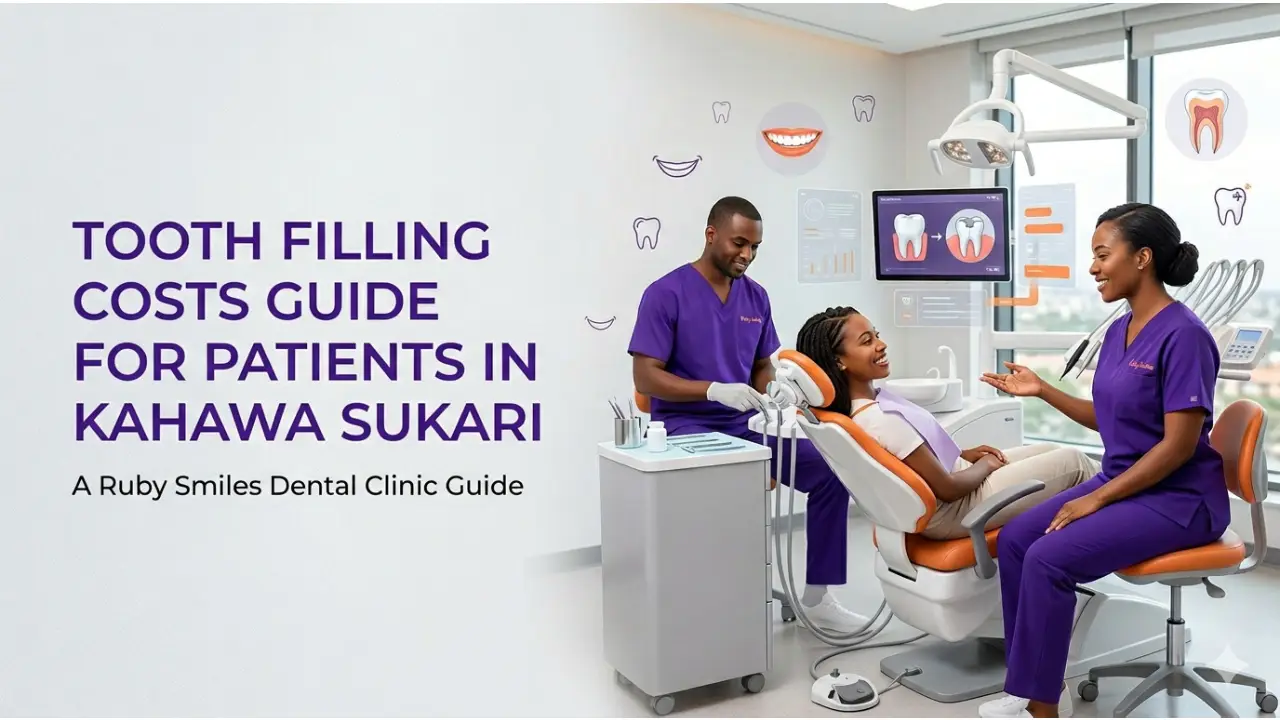
Ruby Smiles Dental Clinic lists tooth filling treatment at KSh 5,000.
A filling may be appropriate when an established cavity can be restored using this approach. However, patients should not assume every painful or damaged tooth can be treated with a KSh 5,000 filling.
The dentist first needs to assess the depth of decay, remaining tooth structure and pulp condition. More extensive damage may require root canal treatment, a crown or another appropriate procedure.
What Happens During Tooth Filling Treatment?
Filling treatment generally involves assessing the affected tooth, managing the decayed area and restoring the resulting defect with a suitable restorative material.
The exact procedure depends on the location, size and condition of the cavity. The aim is to restore the damaged area while preserving healthy tooth structure where possible.
If assessment shows that decay extends deeper than expected, the treatment plan may need to change.
When Might a Cavity Need Root Canal Treatment?
A cavity does not automatically require root canal treatment. This treatment may become appropriate when decay has progressed sufficiently to affect the dental pulp and the tooth remains suitable for restoration.
Ruby Smiles Dental Clinic lists root canal treatment at KSh 20,000 for anterior teeth, KSh 20,000 for premolars and KSh 25,000 for molars. Treatment takes two to three appointments and includes X-rays and a permanent filling.
Whether root canal treatment is necessary should be determined through professional assessment rather than pain alone.
Can a Badly Decayed Tooth Need a Crown?
A dental crown may be considered when decay or previous damage has resulted in substantial structural loss but the tooth remains restorable.
Ruby Smiles Dental Clinic lists PFM crowns at KSh 20,000, Zirconia crowns at KSh 40,000 and Emax crowns at KSh 40,000. Crown treatment takes three appointments, with three instalments aligned with the treatment stages.
A crown should not simply cover active untreated decay. The decay must first be appropriately managed.
Not every large cavity requires a crown. The dentist considers remaining tooth structure and the overall condition of the tooth before recommending treatment.
When Might a Decayed Tooth Need Extraction?
Extraction may be considered when a tooth is too extensively damaged to be predictably restored.
However, having a large cavity does not automatically mean the tooth must be removed. Some damaged teeth may still be suitable for restorative treatment.
The dentist can assess remaining tooth structure, pulp condition, supporting tissues and overall restorability before recommending extraction.
If extraction is necessary, tooth replacement options may be discussed where appropriate.
Can You Treat a Tooth Cavity at Home?
Home care can reduce cavity risk and support the management of selected early non-cavitated lesions. However, an established cavity cannot simply be repaired at home.
Fluoride toothpaste, good plaque control and dietary changes support oral health, but they cannot regrow tooth structure that has already been physically lost.
Home remedies should therefore not replace professional assessment when a cavity is suspected.
How Can You Reduce Your Risk of Future Cavities?
Understanding what causes tooth cavity formation can help with prevention.
Useful habits include:
- Brush effectively with fluoride toothpaste.
- Clean between the teeth regularly.
- Reduce frequent sugary foods and drinks.
- Avoid repeatedly sipping sugary beverages.
- Maintain appropriate fluoride exposure.
- Seek professional advice for persistent dry mouth.
- Attend dental examinations based on individual needs.
- Maintain good oral hygiene around existing restorations.
These measures can reduce cavity risk but cannot guarantee that someone will never develop tooth decay.
How Often Should You Have a Dental Check-Up?
There is no single check-up interval that is appropriate for everyone.
The recommended schedule may depend on previous cavity experience, current oral health, existing restorations, dry mouth and other individual risk factors.
Someone with repeated cavities may require a different recall schedule from a patient with a lower current risk. A dentist can recommend an appropriate interval after assessment.
Frequently Asked Questions
What is the main cause of tooth cavities?
Cavities develop through interactions between dental plaque biofilm, bacterial acid production, fermentable carbohydrates and repeated periods of mineral loss. Saliva, fluoride and individual factors also influence the process.
Does eating sugar cause cavities?
Frequent sugar exposure contributes to cavity risk because bacteria within plaque can metabolize fermentable carbohydrates and produce acids. However, sugar is not the only factor involved.
Can brushing stop a cavity?
Effective brushing with fluoride toothpaste can help reduce cavity risk and support selected early non-cavitated lesions. It cannot rebuild tooth structure after an established cavity has formed.
Can a cavity heal without a filling?
Selected early non-cavitated lesions may sometimes be arrested or remineralized. An established cavity involving physical loss of tooth structure generally requires restorative assessment.
How much is a tooth filling at Ruby Smiles Dental Clinic?
Ruby Smiles Dental Clinic lists tooth filling treatment at KSh 5,000. The tooth should first be assessed to determine whether a filling is appropriate.
When should a cavity receive urgent attention?
Dental decay can sometimes progress to significant pain, infection or swelling. Facial swelling, difficulty swallowing or breathing, or significant systemic symptoms associated with a dental problem can require urgent assessment.
Book Your Tooth Cavity Treatment
A cavity may start without significant discomfort, but tooth decay can continue progressing when the conditions causing mineral loss remain active. Getting the tooth assessed can determine whether you need preventive care, a filling or another treatment.
Ruby Smiles Dental Clinic offers tooth filling treatment at KSh 5,000. If the decay has progressed further, the dental team can assess whether root canal treatment, a crown or another approach is more appropriate.
If you are in Githurai and have noticed tooth sensitivity, discomfort when chewing, a visible cavity or another change in your tooth, professional assessment can help identify the problem before choosing treatment.
Book your tooth cavity treatment today with Ruby Smiles Dental Clinic and get the appropriate care to treat existing decay, restore your tooth where possible and protect your smile.