If you are in Kahawa West searching for a tooth refill, you are usually looking for a dental filling, replacement of an existing filling, or repair of a damaged restoration. The right option should not be chosen only by price, colour, or an online comparison. A dentist first needs to examine the tooth and determine the cause and extent of damage, how much healthy tooth remains, and whether a filling is suitable at all.
A filling can restore selected areas of tooth structure affected by decay, minor fracture, wear, or failure of a previous restoration. However, some teeth require a different restorative approach, which is why diagnosis comes before material selection.
What Does Tooth Refill Mean?
“Tooth refill” is a common search phrase rather than the usual clinical term. In dentistry, the more natural terms are tooth filling or dental filling. Someone searching for a refill may be looking for a first filling for a cavity, replacement of an old restoration, or assessment of a filling that has broken or fallen out.
A dental filling replaces selected tooth structure that has been lost or damaged. Fillings are commonly associated with cavities, but they may also be used in other suitable restorative situations.
How Does a Dentist Choose the Right Tooth Filling?
Choosing a restoration begins with understanding the tooth. The dentist may consider your symptoms and dental history, examine the tooth and existing restorations, assess the bite, and evaluate how much sound tooth structure remains.
What Determines the Right Tooth Filling?
| Factor | Why It Matters |
|---|---|
| Tooth location | Front and back teeth have different functional and cosmetic demands |
| Size of damage | Larger defects may require a different restorative approach |
| Remaining tooth structure | Helps determine whether a filling can adequately restore the tooth |
| Bite forces | Posterior teeth generally experience greater chewing forces |
| Appearance | Tooth-coloured materials may be preferred in visible areas |
| Moisture control | Some restorative materials require specific conditions during placement |
| Existing restoration | Failed or damaged fillings require assessment before replacement |
| Decay depth | Deep decay may affect whether additional treatment is required |
| Material properties | Different materials have different clinical uses |
| Overall tooth condition | Severely damaged teeth may need treatment beyond a filling |
These factors are considered together. There is no filling material that is automatically correct for every cavity or every patient. The NHS similarly notes that dentists select filling types according to a patient’s clinical needs.
Which Dental Filling Materials May Be Considered?
Direct restorative materials include composite resin, glass ionomer materials and amalgam. Temporary restorative materials may also be used in selected short-term situations. Material choice depends on the clinical circumstances rather than a simple ranking from best to worst. The ADA reviews composite, glass ionomer and amalgam among materials used for direct restorations.
Common Dental Filling Materials
| Filling Material | Common Considerations |
|---|---|
| Composite resin | Tooth-coloured and commonly considered where appearance matters |
| Glass ionomer | May be useful in selected situations depending on tooth location and clinical needs |
| Amalgam | A durable traditional restorative material with a metallic appearance |
| Temporary filling material | Used for selected short-term treatment situations rather than as the final restoration |
Composite Resin
Composite resin is tooth-coloured, making it useful when appearance is an important consideration. It is used for many types of direct restorations and bonds to prepared tooth structure through an adhesive process.
However, appearance is not the only consideration. Restoration size, tooth position, moisture control, bite forces, and the amount of remaining tooth structure can influence whether composite is appropriate.
Glass Ionomer
Glass ionomer materials have characteristics that make them useful in selected restorative situations. They can chemically bond to tooth structure and are associated with fluoride release.
Their suitability depends on the restoration and clinical environment, particularly the functional demands.
Amalgam
Dental amalgam is a long-established metallic restorative material. The American Dental Association continues to recognize amalgam as a restorative option and describes material selection as a decision that should account for factors such as cavity size and location, health considerations, and patient needs.
Its metallic appearance differs from tooth-coloured materials, and it is one of several restorative options.
Temporary Fillings
Temporary restorative materials may be placed during selected stages of dental treatment when a final restoration is not being completed immediately.
A temporary filling is not a do-it-yourself substitute for dental treatment. If a filling breaks or falls out, arrange professional assessment rather than trying to permanently repair the tooth at home.
Does Tooth Location Affect Filling Choice?
Yes. A visible front tooth and a back tooth used heavily for chewing can present different restorative demands.
For front teeth, appearance may carry greater weight because the restoration can be visible when speaking or smiling. Tooth-coloured materials may therefore be considered, but the dentist still needs to evaluate the size of the defect, remaining structure, bite, and function.
Premolars and molars experience different chewing forces and can have larger restorations. For posterior teeth, restoration size, remaining tooth structure, material properties, moisture control, and functional load may become particularly important.
No single material is always best for front or back teeth. Current ADA restorative guidance supports different materials depending on factors such as tooth location and restoration type.
When Does an Old Filling Need Repair or Replacement?
An old filling does not automatically need replacement simply because of its age.
A dentist may monitor an existing restoration when it remains clinically acceptable. If a localized problem is found, repair may sometimes be considered rather than removing and replacing the entire restoration. In other situations, complete replacement may be appropriate.
Assessment may be needed when a filling feels loose, part of it breaks, new sensitivity develops, biting becomes uncomfortable, food begins trapping around it, or visible changes appear. These signs do not prove that replacement is necessary.
There is no universal replacement schedule. Longevity varies with material, restoration size, tooth location, bite forces, oral hygiene, habits, remaining structure, and dental care. The article brief specifically requires fillings to be monitored and repaired or replaced when clinically indicated rather than according to a universal timetable.
What If a Filling Is Not Enough to Restore the Tooth?
A conventional filling is appropriate only when the tooth can be suitably restored that way. More extensive damage may require a different plan.
A crown covers substantially more of the visible tooth and may be considered when there is not enough suitable structure for a conventional filling or when other restorative factors make broader coverage appropriate. An inlay or onlay may also be considered in selected situations.
Root canal treatment serves a different purpose. A filling restores lost or damaged tooth structure, while root canal treatment manages selected conditions involving the dental pulp and tissues around the root. Pain severity alone cannot tell you which treatment is required.
Deep decay does not automatically mean root canal treatment is necessary. The dentist needs to determine how far the problem extends and assess the condition of the pulp. The NHS explains that a cavity may require a filling, while decay that has reached the pulp may require root canal treatment.
Extraction is generally considered when retaining a tooth is not appropriate or feasible. It should not be presented as a routine alternative for a straightforward cavity that can be restored.
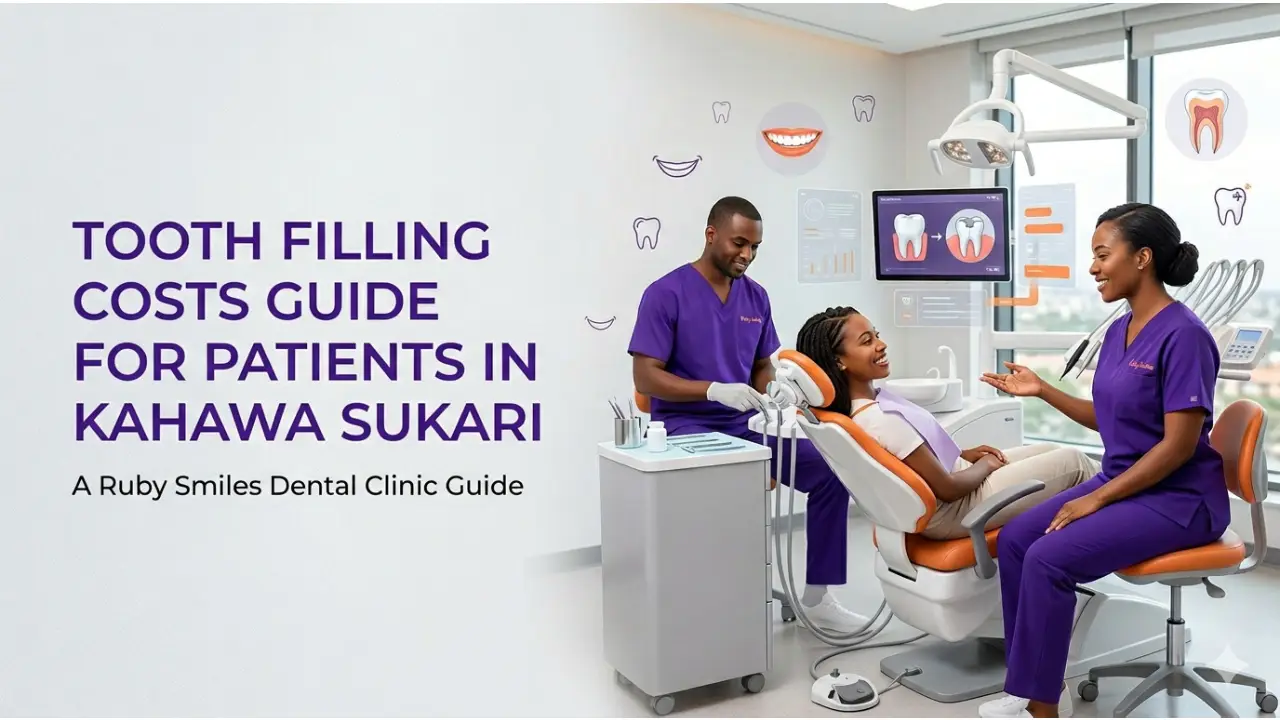
How Much Does a Tooth Filling Cost in Kenya?
Tooth filling cost in Kenya varies between providers and cases. Factors can include the filling material, tooth involved, restoration size, complexity, diagnostic requirements, and whether other treatment is needed.
Ruby Smiles Dental Clinic currently publishes a price of KSh 5,000 per tooth for permanent fillings on its tooth filling cost guide. Its broader tooth-filling information discusses Nairobi prices that can vary according to filling material and complexity, so patients should rely on an individual current quotation for their treatment.
The cheapest filling is not automatically the most appropriate option, and a higher price does not automatically mean better dental care.
What Should You Expect After a Tooth Filling?
Some people experience temporary sensitivity after a filling. The experience varies according to the tooth, treatment performed, and individual response. Persistent, worsening, or significant symptoms should be professionally assessed rather than self-diagnosed.
A filled tooth can still develop new decay around the restoration or elsewhere on the tooth.
Brush regularly with an appropriate fluoride toothpaste, clean between the teeth, reduce frequent sugar exposure, and attend dental examinations according to professional advice. The NHS recommends regular brushing with fluoride toothpaste, interdental cleaning, limiting frequent sugary foods and drinks, and regular dental checks as part of preventing tooth decay.
A filling repairs existing damage, but it does not make the tooth immune to future decay.
How Should Patients Near Kahawa West Choose a Filling Provider?
Patients near Kahawa West comparing tooth filling options should consider more than the advertised price or material.
Look for an appropriately qualified dental professional who begins with an examination and explains the diagnosis clearly. Appropriate imaging should be used when clinically necessary rather than automatically or not at all.
Ask why a material is recommended, what alternatives exist, what the cost includes, and how the restoration will be monitored. Referral should be available when appropriate.
Ruby Smiles Dental Clinic currently verifies tooth filling among its dental services. Its official website lists the clinic at Unicity Mall, China Square, along Thika Road. Another current clinic page describes the location as Unicity Mall, next to Kenyatta University Main Campus, along Thika Road.
Ruby Smiles should not be described as operating a branch in Kahawa West.
Frequently Asked Questions
What does tooth refill mean?
Tooth refill usually refers to getting a dental filling, replacing an existing filling, or having a damaged restoration assessed. Dental filling is the more common clinical term.
Which type of tooth filling is best?
There is no universally best filling. Material choice depends on factors including tooth location, restoration size, remaining structure, bite forces, moisture control, appearance requirements, and individual clinical needs.
How do dentists choose a filling material?
The dentist examines the tooth and considers the extent of damage, location, remaining structure, bite, existing restorations, material properties, cosmetic needs, and whether a direct filling can adequately restore the tooth.
How long does a tooth filling last?
There is no guaranteed lifespan. Longevity varies according to the filling material, restoration size, tooth location, bite forces, oral hygiene, diet, remaining tooth structure, habits such as grinding, and dental maintenance.
Does an old filling always need replacement?
No. Age alone does not determine whether a filling should be replaced. Depending on clinical findings, a restoration may be monitored, repaired, or replaced.
Can a filling repair a badly damaged tooth?
Not always. If extensive tooth structure has been lost, a dentist may consider another restorative approach, such as an onlay or crown. Selected conditions involving the pulp may require root canal treatment, while a tooth that cannot reasonably be restored may require a different plan.
How much does a tooth filling cost in Kenya?
Prices vary according to the provider, material, tooth, restoration size, complexity, and additional treatment requirements. Ruby Smiles currently publishes permanent tooth fillings at KSh 5,000 per tooth. Confirm the current price and treatment details during your assessment.
Book Your Tooth Filling Consultation Near Kahawa West
If you are near Kahawa West considering a tooth refill or replacement of an existing filling, begin with a dental assessment rather than selecting a restoration based only on price or appearance.
Ruby Smiles Dental Clinic provides tooth filling services at Unicity Mall, China Square, along Thika Road, Nairobi, with its current official information also describing the clinic as next to Kenyatta University Main Campus.
During your consultation, you can discuss your symptoms, examination findings, tooth decay or damage, existing restorations, suitable filling materials, current tooth filling cost, whether an old restoration should be monitored, repaired or replaced, and whether another restorative treatment may be more appropriate.
Book your consultation today with Ruby Smiles Dental Clinic to receive an individual assessment and understand the filling options suitable for your tooth.