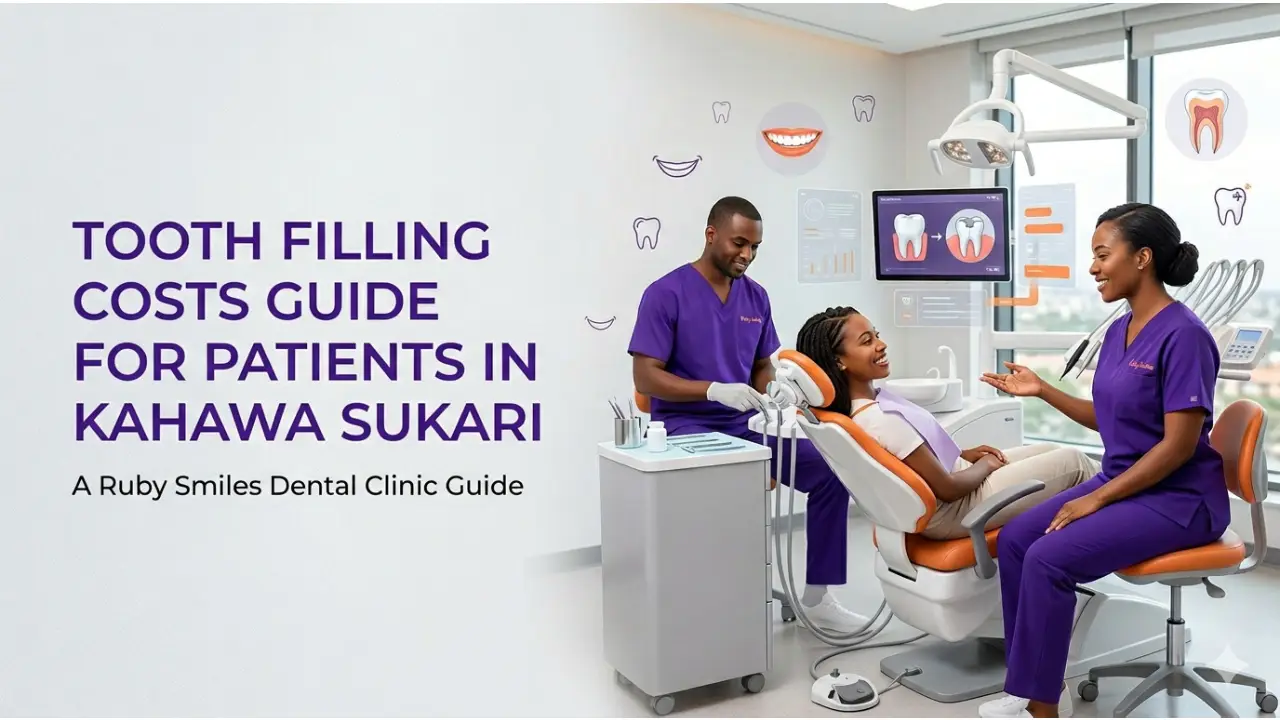
Tooth fillings are among the most common restorative dental treatments used to repair cavities and restore damaged teeth. When tooth decay or minor tooth damage is treated early, a filling can restore the tooth’s strength, shape, and function while preserving as much healthy tooth structure as possible. Early treatment also helps reduce the likelihood of requiring more complex restorative procedures later.
Many people searching for filling teeth near Rosslyn want to know what a filling is, when it is needed, which filling material is suitable, and whether treatment is painful. Others experience tooth sensitivity, discomfort while chewing, or notice visible damage and wonder whether a filling could help. Because several dental conditions produce similar symptoms, only a professional examination can determine the correct treatment.
Patients travelling from Rosslyn can conveniently visit Ruby Smiles Dental Clinic, located at Unicity Mall along Thika Road, for a professional dental examination and tooth filling assessment. The clinic provides tooth filling treatment for cavities and damaged teeth and offers modern tooth-coloured filling solutions where appropriate. Every treatment recommendation begins with a thorough examination before a personalised treatment plan is prepared.
Ruby Smiles has not published verified prices for tooth fillings. Treatment costs depend on factors such as the size and location of the cavity, the filling material selected, and the overall treatment requirements. Following your examination, the dentist can provide a personalised written quotation based on your clinical needs.
This guide explains what tooth fillings are, why they are used, the available filling materials, the treatment process, aftercare, and when another restorative treatment may be more appropriate.
Quick Answer
A tooth filling is a restorative material placed into a tooth after decay or damaged tooth structure has been removed. It restores the tooth’s shape, strength, and function while helping preserve the natural tooth.
A tooth filling may help:
- Restore damaged tooth structure.
- Repair cavities.
- Improve chewing function.
- Restore the natural shape of the tooth.
- Help preserve the natural tooth.
- Reduce sensitivity where appropriate.
- Improve appearance with tooth-coloured materials where appropriate.
The most suitable filling material depends on the size and location of the cavity, your oral health, and your dentist’s professional assessment.
What Is a Tooth Filling?
A tooth filling is a restorative treatment used to repair a tooth affected by decay or minor damage. After removing the damaged tooth structure, the dentist places a filling material into the prepared area to restore the tooth’s normal shape and function.
Unlike a dental crown, which covers most or all of the visible tooth, a filling restores only the damaged portion, allowing healthy tooth structure to be preserved whenever possible.
Modern fillings are available in different materials, and your dentist will recommend the option most suitable for your clinical needs and treatment goals.
Why Are Tooth Fillings Needed?
Tooth fillings are commonly recommended when a cavity or minor tooth damage can be restored without requiring more extensive treatment.
A filling may be used to:
- Repair tooth decay.
- Restore chipped or damaged teeth.
- Replace worn or damaged fillings.
- Restore chewing function.
- Preserve natural tooth structure.
- Help prevent further progression of tooth decay.
Treating cavities early often allows simpler treatment and helps preserve more of the natural tooth.
Common Filling Materials
Several filling materials are used in modern restorative dentistry, and each offers different characteristics depending on the clinical situation.
| Filling Material | General Characteristics | Typical Uses |
|---|---|---|
| Composite resin | Tooth-coloured material with natural appearance | Front and back teeth where aesthetics are important |
| Glass ionomer | Releases fluoride over time | Selected low-stress areas and some children’s teeth |
| Dental amalgam | Durable metallic filling material | Selected situations where appropriate |
| Ceramic fillings | Highly aesthetic laboratory-made restorations | Larger restorations where appearance is important |
No single filling material is suitable for every patient. Your dentist will recommend the option that best matches your oral health needs.
Composite Tooth-Coloured Fillings
Composite fillings closely match the natural colour of teeth, making them a popular choice for visible areas of the mouth. They bond directly to the tooth structure while restoring both function and appearance.
Ruby Smiles provides modern tooth-coloured filling solutions where appropriate following a professional assessment.
How Are Fillings Different from Crowns and Root Canal Treatment?
Although fillings, crowns, and root canal treatment all restore teeth, they serve different purposes.
A filling repairs a tooth when sufficient healthy tooth structure remains.
A dental crown is generally recommended when a tooth has lost substantial structure and requires greater protection.
Root canal treatment may be necessary when decay or damage has reached the inner pulp of the tooth. Some root canal-treated teeth may later require a crown for additional support.
The most appropriate treatment depends on the findings of your professional dental examination.
Benefits of Tooth Fillings
When recommended after a professional diagnosis, tooth fillings offer several restorative benefits.
These may include:
- Restoring normal tooth function.
- Preserving the natural tooth.
- Improving chewing ability.
- Restoring the shape of the tooth.
- Helping prevent further tooth damage.
- Providing a natural appearance with tooth-coloured materials where appropriate.
- Reducing sensitivity after successful treatment.
The benefits depend on the condition of the tooth before treatment and the extent of the damage.
Signs You May Need a Tooth Filling
Although only a dentist can diagnose tooth decay, certain symptoms suggest that a professional dental examination is advisable.
| Possible Sign | Why It Should Be Checked |
|---|---|
| Tooth sensitivity | May indicate decay or another dental condition |
| Pain when chewing | Could suggest tooth damage |
| Visible hole in the tooth | May indicate a cavity |
| Food frequently getting trapped | Could be associated with decay or damage |
| Dark or discoloured areas | Require professional assessment |
| Broken or chipped filling | Existing restorations should be evaluated |
These signs do not automatically mean that you need a filling, but they indicate that a professional dental examination is recommended.
How Is a Tooth Filling Procedure Performed?
The exact tooth filling procedure depends on the size of the cavity, the location of the tooth, and the type of filling material selected. Before recommending treatment, your dentist will first confirm that the tooth can be restored with a filling and that a more extensive procedure is not required.
A typical tooth filling appointment may include:
- Professional dental examination.
- Dental X-rays where clinically appropriate.
- Assessment of the affected tooth.
- Removal of tooth decay or damaged tooth structure.
- Cleaning of the prepared area.
- Placement of the filling material.
- Shaping and polishing the restoration.
- Bite adjustment.
- Review where necessary.
The exact steps vary according to each patient’s clinical needs. Your dentist will explain the recommended treatment before the procedure begins.
What Happens After a Tooth Filling?
Most patients are able to return to their normal daily activities soon after treatment, although the recovery experience varies depending on the size of the filling, the treated tooth, and the filling material used.
Following treatment, you may receive personalised advice such as:
- Waiting until any numbness has completely worn off before eating.
- Avoiding very hard foods if recommended by your dentist.
- Brushing and flossing carefully around the restored tooth.
- Monitoring the filling for any unusual discomfort.
- Returning for review if the filling feels too high or uncomfortable.
Some patients experience temporary sensitivity after treatment, which often improves as the tooth settles. If discomfort persists or worsens, you should contact your dentist for further assessment.
How Long Do Tooth Fillings Last?
One of the most common questions patients ask is how long a filling will last. There is no single answer because the lifespan of a filling depends on several individual factors.
These include:
- The filling material used.
- The size of the restoration.
- The location of the tooth.
- Daily oral hygiene.
- Chewing habits.
- Teeth grinding or clenching.
- Regular dental examinations.
With good oral hygiene and routine dental care, many fillings remain functional for several years. Your dentist will monitor your restoration during routine check-ups and recommend replacement if it becomes worn or damaged.
When Is a Filling No Longer Enough?
Although fillings are highly effective for many cavities, they are not suitable for every damaged tooth.
A dentist may recommend another restorative treatment when:
- A large amount of tooth structure has been lost.
- The tooth has extensive fractures.
- Decay has reached the dental pulp.
- A previous filling can no longer adequately support the tooth.
- The tooth cannot be predictably restored with a filling alone.
Depending on the clinical findings, alternative treatments may include a dental crown, root canal treatment, or, in some situations, tooth extraction. The decision is always based on a professional examination rather than symptoms alone.
What Influences the Cost of a Tooth Filling?
Many patients want to know the cost of a tooth filling before scheduling treatment. However, there is no standard fee that applies to every patient because treatment requirements differ.
Factors that commonly influence treatment costs include:
- The size of the cavity.
- The location of the affected tooth.
- The filling material selected.
- The number of tooth surfaces requiring restoration.
- Whether dental X-rays are required.
- The complexity of treatment.
Ruby Smiles Dental Clinic has not published verified prices for tooth fillings. Instead of estimating treatment costs, the clinic recommends a professional dental examination so that your dentist can assess the affected tooth and provide a personalised written quotation based on your individual treatment needs.
Verified Tooth Filling Services at Ruby Smiles Dental Clinic
Based on the verified clinic information, Ruby Smiles Dental Clinic provides:
- Tooth filling treatment for cavities and damaged teeth.
- Modern tooth-coloured filling solutions where appropriate.
- Professional dental examinations.
- Dental crowns.
- Root canal treatment.
- Appointment booking through the official website.
The clinic is located at Unicity Mall along Thika Road, making it convenient for residents travelling from Rosslyn and surrounding areas.
Every treatment recommendation begins with a professional dental examination to determine whether a tooth filling is the most appropriate option. If another restorative treatment would provide a better long-term outcome, your dentist will explain the available alternatives and prepare a personalised treatment plan.
Frequently Asked Questions
Do tooth fillings hurt?
Modern tooth filling treatment is performed with patient comfort in mind. Your dentist will explain the procedure and discuss the most appropriate approach before treatment begins.
Can an old filling be replaced?
Yes. Worn, damaged, leaking, or broken fillings can often be replaced after a professional examination determines that replacement is appropriate.
Will a tooth filling match the colour of my teeth?
Where appropriate, Ruby Smiles provides modern tooth-coloured filling solutions that are designed to blend naturally with your existing teeth.
Can every cavity be treated with a filling?
No. Small and moderate cavities are often suitable for fillings, but more extensive damage may require treatments such as a dental crown or root canal treatment. Your dentist will determine the most appropriate option after examining the tooth.
How much does a tooth filling cost?
Ruby Smiles Dental Clinic has not published verified tooth filling prices. The final cost depends on factors such as the size and location of the cavity, the filling material selected, and the overall treatment requirements. A personalised written quotation is provided after a professional dental examination.
Book Your Tooth Filling Consultation Today
If you are travelling from Rosslyn, Ruby Smiles Dental Clinic welcomes you to its convenient location at Unicity Mall along Thika Road for a comprehensive dental examination and tooth filling assessment. During your appointment, your dentist will examine the affected tooth, recommend dental X-rays where clinically appropriate, determine whether a tooth filling is the most suitable treatment, and explain the available restorative options based on your individual needs.
You will receive a personalised treatment plan, guidance on the most appropriate filling material, and a written quotation based on your treatment requirements. If a filling is not the best solution, your dentist will discuss alternative treatments such as a dental crown or root canal treatment and help you choose the option that best supports your long-term oral health.
Book your tooth filling consultation today at Ruby Smiles Dental Clinic for a professional dental examination, cavity assessment, personalised restorative treatment planning, modern tooth-coloured filling solutions, and compassionate dental care focused on preserving your natural smile.